
Data Discovery
Find sensitive data
wherever it lives.
Data Discovery scans your databases and file shares without agents, classifies sensitive columns with rule-based and AI-assisted classification, and gives every column a risk score. You know exactly where personal and regulated data sits.
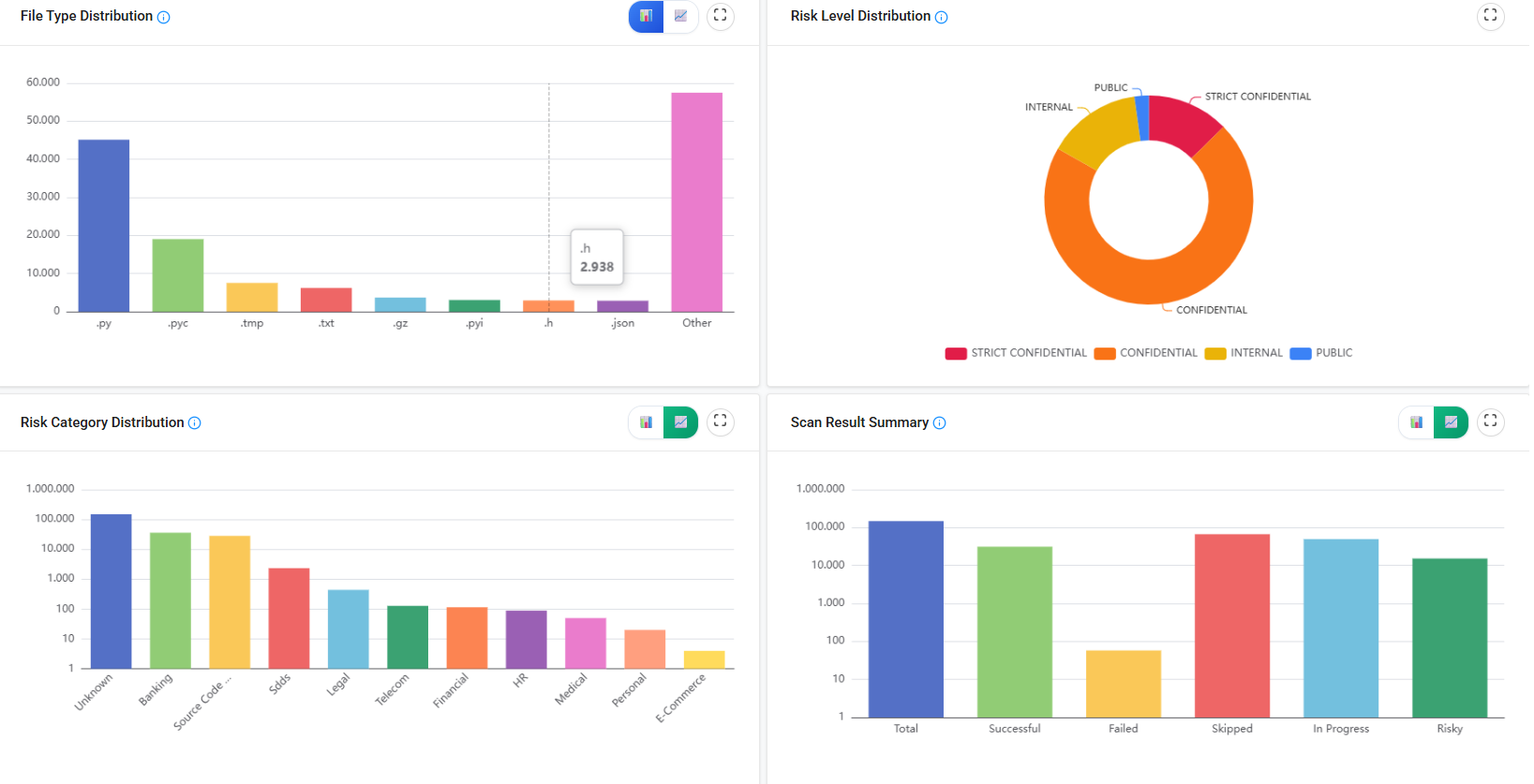
Discover.
Classify. Govern.
From the first scan to audit-ready reports, Data Discovery builds the sensitive data inventory that the rest of the suite relies on.
From metadata to inventory.
Data Discovery reads metadata, samples column data, and classifies it in a dedicated engine. Reviewed results become the inventory that other modules use.
Scan
Read schemas, tables, and columns from your sources and file shares.
Sample
Sample column data and stream it to the classification engine.
Classify
Apply rules and AI assistance, then score each column for risk.
Review
Analysts confirm results; the inventory feeds masking, monitoring, and privacy.
Know where personal data lives.
Most teams cannot answer a simple question: which tables hold personal data? Data Discovery answers it across databases and file shares, and keeps the answer current with scheduled scans.
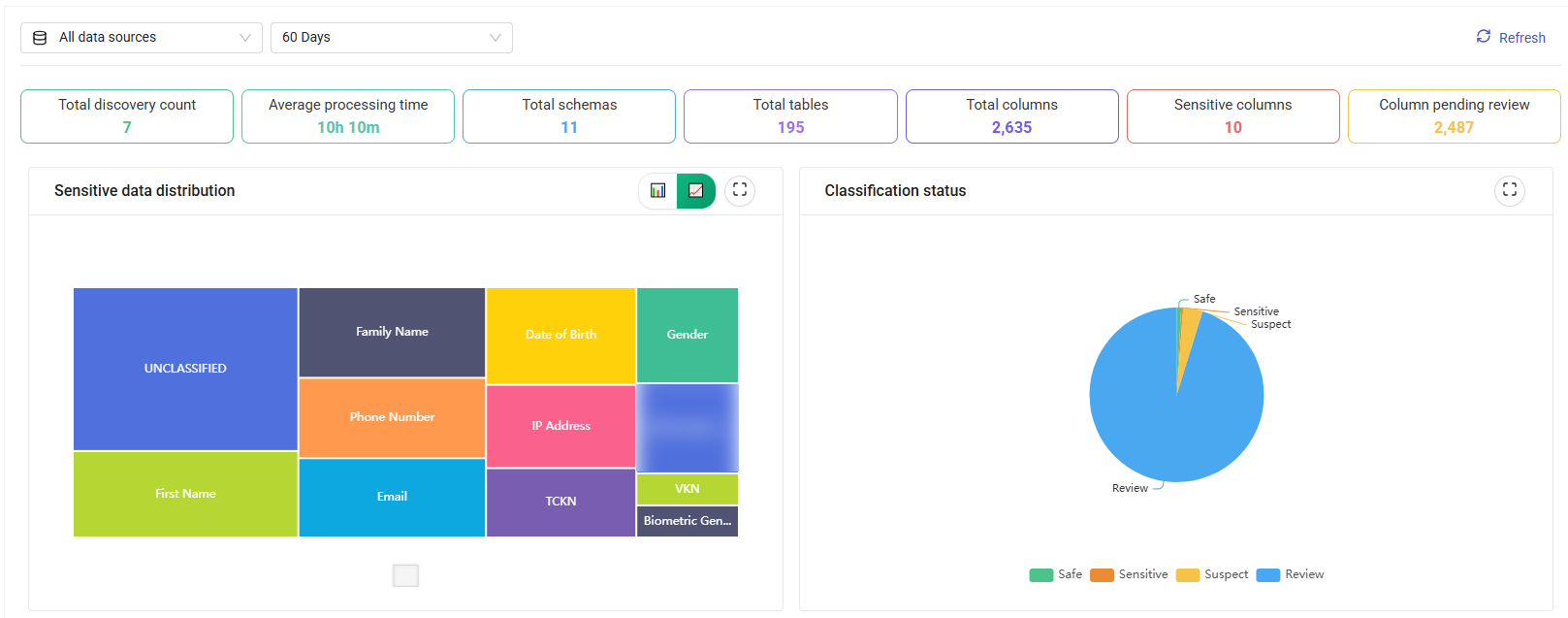
- Sensitive columns classified per source, schema, and table
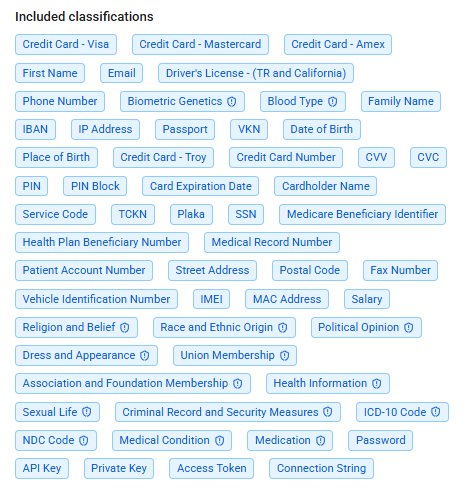
- Local formats such as TCKN, VKN, and IBAN recognized
- Risk score per column to prioritize work
- Ownership and tags to assign follow-up
Turn classification into audit evidence.
Map what you found to the standards you report against. Built-in PII, GDPR, PCI DSS, and KVKK standards turn classification results into compliance reports.
- Built-in PII, GDPR, PCI DSS, and KVKK standards
- Compliance reports from classification results
- Catalog version history to show what changed
- Results shared with masking and privacy modules
Questions & answers.
Do I need to install agents on my databases?
Which sources can I scan?
Can I add my own classification rules?
How do the other modules use the results?
Explore the other modules
Dynamic Data Masking
Mask sensitive data in query results for unauthorized users, without touching the source data.
Database Activity Monitoring
Detect, classify, alert on, and report the events in your database systems.
Data Security Posture Management
Turn database activity into access visibility, anomaly alerts, and scheduled access reports.
Privacy Management
Run consents and data subject requests for KVKK and GDPR in one place, with deadlines tracked.
Test Data Management
Give development and QA teams masked or synthetic data, orchestrated as reusable scenarios.
See Data Discovery on your own data.
Book a demo and we will show you how Data Discovery finds and classifies sensitive data in your environment.